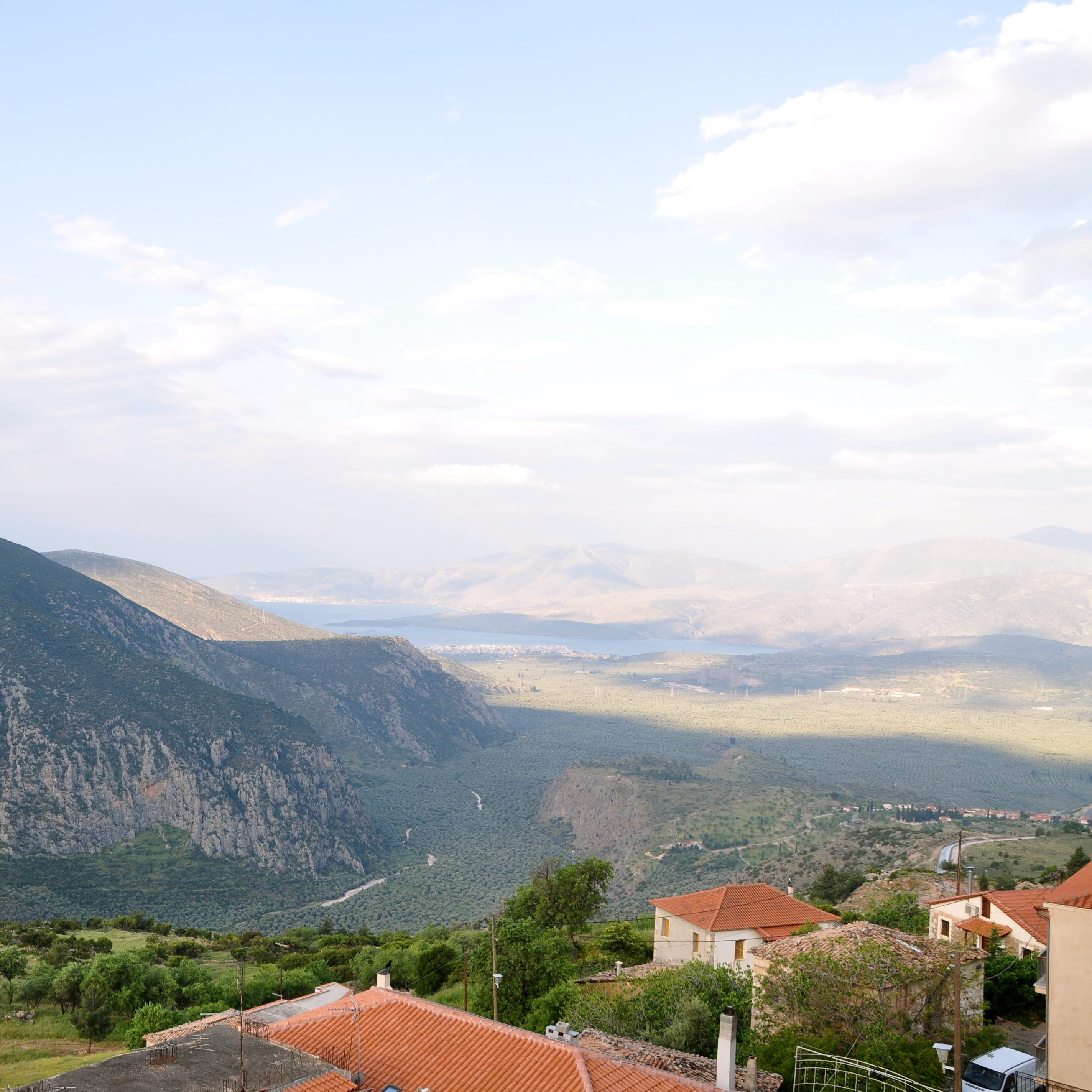
APRIL 20/21: I am slow in posting due to a combination of exhaustion and internet connections. But the visits to Delphi and Meteora marked the highlights of the trip — a magical sense of being in a different world. And I don’t just mean Greece.
At Delphi I stood where the priest stood to deliver messages that the Oracle of Delphia (Pythia) received.

Though we believe that anyplace we stand is Holy Ground, Delphi (the “i” is pronounced as an “e”) wasn’t like the glamorized version in movies I’ve seen. The story is that each Pythia, a woman chosen every five years, would have been a woman of about 50 years of age (95 to us), who was known to be a woman of wisdom and purity.
The life that she willingly chose (a high priestess type honor) was one of seclusion worse than that of nuns. Living in a small, dark room, she dedicated herself to receiving messages from the God of the ancient Greek people. Most of the messages were not the seemingly trivial questions that you and I might ask. They were usually questions from rulers about the best course of action to take for the territory they governed.
The same day we drove to Kalambaka and spent the night in the shadows of the gigantic Meteora sandstone rocks. The monasteries built in the rocks are not visible from the town. The following photo was taken from the bus the next day. You can see the town in the background.
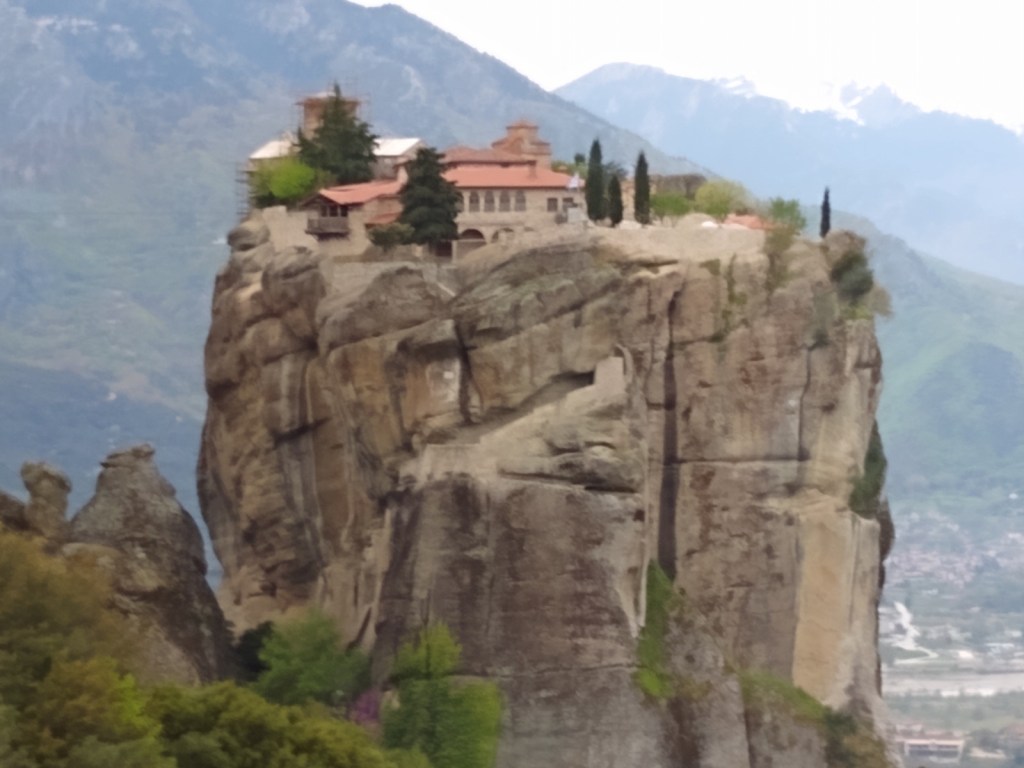
This is not the monastery or nunnery that we visited. This one is visited only by people who are making a holy pilgrimage due to the difficulty of reaching it — but it is possible.
The two places that we visited were actually more easily accessed than Olympia and Dephi; though I feel a sense of accomplishment at having made it through all of the destinations. In spite of not being in the best physical condition, I decided that the high altitudes were my biggest challenge.

Monasteries began as cave dwellings in holes in the cliffs. A hermit-like monk, who would have been a young man at the time, would make one trip to a cave and live there the rest of his life. Methods such as pulleys were devised, still in use to some extent today, and were used to deliver supplies to him.
Each new “generation” of monks added onto what existed until, over about a 400 year period of time, the magnificent monasteries and nunneries that we visit today came into existence.
Thursday evening we returned to Athens — where I collapsed. LOL It had been a tiring trip, but very fulfilling. It is easy to see why Greece is such a spiritual place to live. Everything these people do is based on years of faith that began with their ancestors who believed that the Gods blessed the faithful and cursed those who were disobedient.
Today’s faith, as I see it, is not much different; even though scientific explanations present alternatives to the Gods. Yet there is still a sense in most of the people that it is better to live a life that is pleasing to the Gods!
When you’re standing in a monastery that is so high that it feels like you’re in the clouds, it’s easy to envision Zeus, Apollo, their goddess wives, and their offspring smiling down upon you.
As I publish this article, it is Friday the 22nd, Easter Friday for Greece. Nothing will open until afternoon in recognition of the Holy day. Tomorrow night at midnight there will be a magnificent firework display and Maria has invited me to view it with her from the rooftop of the apartments. She said, “Bring your camera!”
Sunday (Easter Sunday here) I leave on a train for Volos, Greece, spend two nights in a hotel near the ocean, meet the man on Monday who is on contract with U.W.M. to teach classes, then return to Athens on Tuesday.
Blessings and hugs from this mortal goddess. (GRIN)
Sharon
 ... and So the Adventure Begins
Leave a comment